Headphones: How to Win
A Connect CE perspective on what it really takes to build a headphone brand in UK and European retail.
I have spent half my career either buying or selling headphones. As a buyer at HMV and InMotion, and on the brand side at Beats by Dr. Dre. I don’t profess to be an audiophile, but I do know a bit about what makes brands work, or not, in this market.
And the secret sauce? It’s rarely just about having the best sound. Lots of factors come into play: design, ecosystem, influencer strategy, on-shelf visibility, retailer fit, in-store execution, pricing, and the commercial incentives that get a brand off the ground. Think House of Marley, Beats, and Skullcandy finding their natural home in HMV. The brand to retailer fit was as important as the product itself.
The Beats Playbook
Going back to my time as Director of Sales for Beats by Dre, they stormed into the market with a completely new approach: fashion and marketing. The products were decent, but far from technically superior. What they sold was aspiration, and it worked spectacularly.
I’m not going to spend time waxing lyrical about Beats’ success. Rather, I want to talk about what’s caught my eye more recently and what it signals for where the market is heading.
The State of the UK Market
The UK headphones market has seen fairly subdued growth in recent years, with significant pressure on average selling prices. The main culprit is that ANC (active noise cancelling) has been devalued as a differentiator. A few years ago it justified a meaningful price premium; today virtually every brand at every price point offers it, which means it’s become table stakes rather than a reason to buy. Shoppers have noticed, and they’re paying less.
The next wave of technology, including spatial audio, AI noise processing and personalisation, Auracast broadcast audio and device tracking, is starting to emerge, but it hasn’t yet moved the needle on value. The brands that will win the next phase of the market are those identifying new battlegrounds before everyone else piles in.
A Brand Worth Watching: JLab
One brand that has genuinely impressed me at the more accessible end of the market is JLab. They’ve done something that very few challenger brands manage: built a strong position in brick-and-mortar retail, rather than relying almost exclusively on online channels as many of their rivals have done. Soundcore, Anker’s audio brand, is a good example of the online-first approach. Owning physical retail shelf space is harder, but the brand-building payoff is significant.
JLab’s core positioning is deliberately simple: premium-feeling features at accessible prices. They’ve moved ANC, customisable EQ, and class-leading battery life down the price curve. Features that once lived in £200+ territory are now available in their line at a fraction of the cost. This isn’t just a budget play; it’s a deliberate strategic positioning.
But what really sets them apart is a string of genuine firsts.
Battery life: 90+ hours on their flagship (60+ with ANC active), a figure that embarrasses most competitors at any price point.
Wireless charging: JLab were the first ANC headphone brand to support standard wireless charging and they include a wireless charging mat in the box.
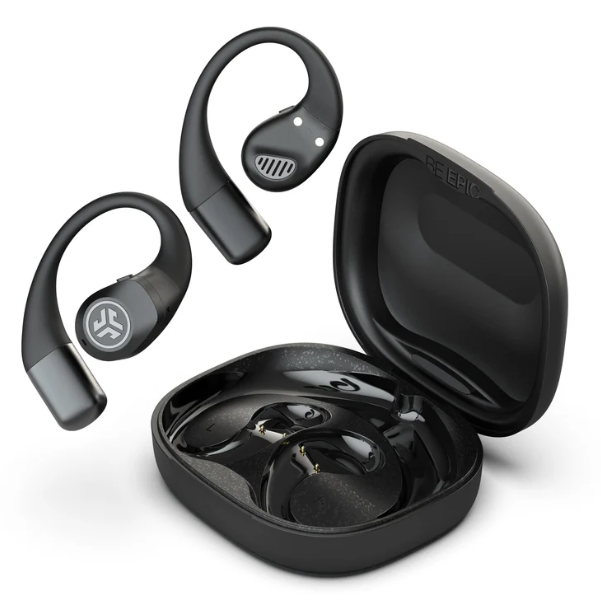
Open-back Bluetooth: They’ve brought the audiophile open-back format into the wireless era, combining the immersive soundstage of open-back design with wireless freedom. A genuinely new category move.
Audio sharing: Their LabShare mode lets two JLab headphone users share audio wirelessly, a lifestyle feature that creates an ecosystem stickiness competitors lack.
Replaceable batteries: This is arguably the most strategically important move of all. The EU’s battery replacement mandate doesn’t come into force until 2027, but JLab have already announced a full replaceable battery strategy, with universal coin cell rechargeables for earbuds and soft pack batteries for headphones, launching in 2026. Getting ahead of regulation is a smart way to build retail and regulatory goodwill, particularly in European markets.
Winning at Shelf
JLab have also been thoughtful about retail execution. Their range is structured around clear usage occasions: gym, commute, office and outdoors. This gives buyers a logical story to merchandise and a justification for wider shelf space. More SKUs on shelf means more brand presence, which compounds over time.
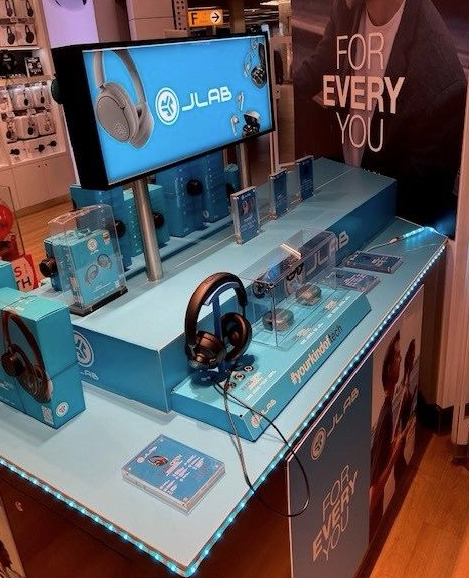
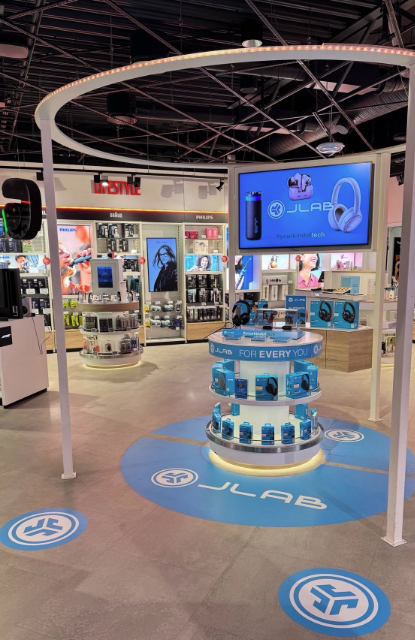
Crucially, they’ve backed this up with strong in-store materials: effective packaging with clear feature call-outs, and some genuinely impressive branded display executions. CAPI-style fixtures are custom-built point-of-sale units that place the brand front and centre in the fixture rather than just occupying a standard shelf slot. This kind of retail investment signals serious intent and helps them punch above their weight in terms of visibility.
Where Does JLab Go From Here?
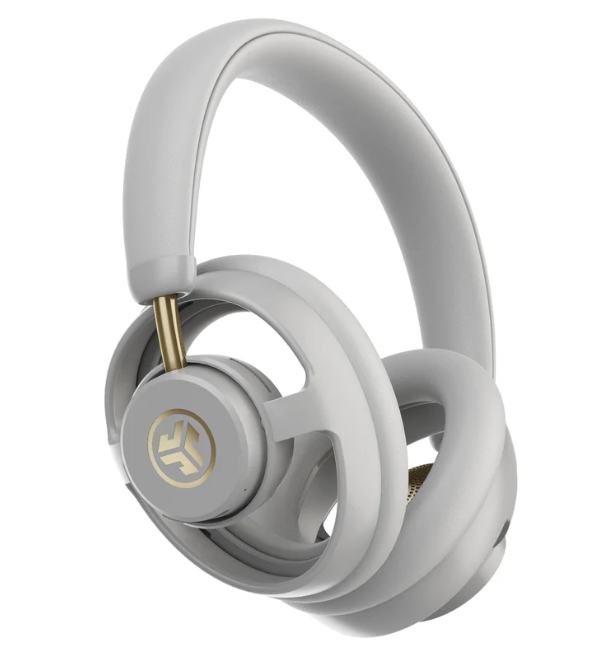
The pattern is a familiar one for brands that crack the accessible end of the market first. As brand equity builds, the opportunity to move upmarket opens up. JLab are already signalling this with products like the Epic Lux Lab Edition, a £200 ANC headphone with hi-res audio certification, spatial audio with head tracking, and AI-powered noise cancelling. Premium aesthetics, premium specs, still at a value-relative-to-category price.
I’d expect further innovation and a measured increase in ASP as the brand continues to build. The question for their retail partners is whether they’re positioned to ride that journey with them, or whether they’ve filed JLab mentally in the ‘budget’ box and will be slow to realise the brand has moved on.
The Bigger Picture
JLab’s rise is a useful reminder that winning in the headphones category isn’t reserved for the brands with the biggest marketing budgets. Feature innovation, smart retail strategy, and a clear point of view on the consumer can take a brand a very long way.
The harder question, one I’ll come back to in a future post, is what’s happening at the premium end of the market, where the rules are very different and the stakes considerably higher. For now, though: bravo JLab.
Connect CE Consulting helps consumer electronics brands enter, scale, and win in UK and European retail. If you’d like to discuss your retail strategy, get in touch.